

My Ear-Dragging Years
From kol to Distinction.

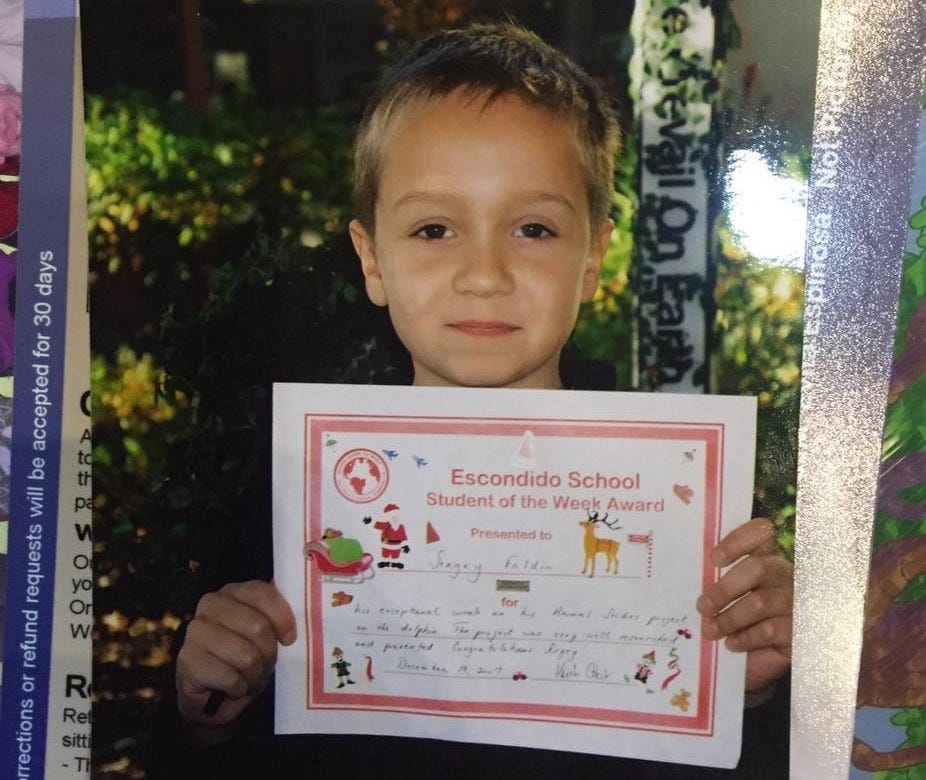
The fact that I’m finishing my Master’s in Creative Writing next month is funny for two reasons.
My BA was in Business Administration.
I never actually finished it.
Taken together, these two facts tend to confuse people.
The first reaction is usually something along the lines of, “Well, that’s quite a jump from business administration to creative writing!” - which requires a long story to explain and involves using the word “dad” quite a lot. (And sometimes the word “footsteps” and then a phrase, “being myself.”)
The second reaction is more practical. People ask how it’s even possible to complete an MA without a BA. Normally, you do a BA, then an MA, and if you’re particularly ambitious or slightly deranged, a PhD. The short answer is: “It happens,” and the longer answer is too boring, so let’s not get into that.
The more interesting bit is that not only am I graduating next month, but I am doing so with distinction.
This sounds impressive, but it also doesn’t really mean anything. In a master’s program, you basically get four outcomes: distinction, merit, pass, or fail. Three of them aren’t really marks but rather polite ways of saying nice one.
Still, when I saw that word - Distinction - on a piece of paper that arrived in the mail, it got me thinking: about marks in general, about the marks I used to get as a kid, about how much they used to matter and then, suddenly, didn’t.
In Russia, we used to follow a four-point grading scale, which is slightly confusing because it starts with 2 and ends with 5.
Occasionally, if the teacher is feeling playful, you might get a 1.
Let’s break them down.
5
If you get a lot of fives, it usually means one of two things.
You’re a people pleaser whose parents are extremely strict. You have no life and start doing homework immediately after coming home from school.
The teacher is your mom.
Students who got only fives were called otlichniki, from the word otlichno, which means excellent.
You had to be a very specific type of person to get only fives. Otlichniki tended to wear suits to school, while the rest of us wore T-shirts. They could have gel in their hair. Often, they wore glasses and smelled funny. They took everything too seriously and during breaks, stood alone, their backs against the concrete walls, the colour of blood.
These were never the people I considered my friends.
I once read somewhere that the people who get all fives at school end up working for those who get all threes. I tend to agree with that.
4
Four is quite a comfortable place to live.
In Russia, we called those students horoshisty, from the word horosho, meaning “good.”
Not great.
Just good.
But as a kid, being called a horoshist always gave me the same feeling my mother gave me when she called me stocky around the age of twelve. It was the summer when it seemed like every girl I knew had grown two heads taller than me over the holidays. I started developing serious insecurities about my height, which, in retrospect, was ridiculous.
These days, at 175 centimetres (can’t be bothered to look up what that is in feet and inches), I’m not exactly tall, but I’m also not the kind of man a woman can fold and carry in her purse - what I call a pocket man. (Still, whenever Masha wears heels, I do look like one. We resemble a typical Russian couple from the early 2000s: a stocky man with a trophy wife.)
But back then, being called stocky felt like an insult. And being a horoshist felt similar. It wasn’t bad exactly, but it reminded you of what you were not. A euphemism designed to soften the blow.
That said, I spent most of my childhood being a horoshist. Mostly fours, occasionally a five, sometimes a three. And, I must confess, my mother was right, and I am a little stocky.
Or what Masha likes to call kabanchik - a diminutive version of the Russian word for “boar.”
3
In the eyes of Russian teachers, a three is slightly pathetic, but if you consider what it takes to get one, it might be the highest badge of honour.
It usually means you didn’t care about whatever you were doing, but managed to survive through charisma, personality, luck, anything, really, but definitely not through studying.
Which is why I like that quote about people who get fives working for those who get threes. It reminds me of something John Gardner once said: the world admires talent but pays for character.
Instead of preparing for the upcoming kontrolnaya (exam), you might have played Dota 2. Instead of learning the poems of Pushkin, you decided to climb the rooftops near Arbat Street and smoke your grandfather’s cigarettes. And still, it is marked as a pass. A narrow one, sure - in fact, so narrow that if you tried the same trick again, it would probably bite you in the ass - but a pass nevertheless.
Still, in the eyes of Russian teachers, a three was almost worse than a two. To them, it meant you were somehow cheating the system, and they simply hadn’t caught you yet.
When I was fourteen, my father sent me to a very demanding math school where I managed to develop a lifelong hatred for mathematics.
The best mark I ever received there was a three.
2
A two was thunder.
Fail.
When you got it, it was usually written in enormous red ink. Russian teachers loved their red pens. Sometimes, the number was so large it took up half a page. Occasionally, the entire page, depending on the teacher’s mental stability.
At the start of the lesson, when homework or exams were handed back on torn squares of paper from a thin green tetradka (notebook), anyone who'd received a two would quickly flip the page upside down to hide it.
Students who received many twos were called dvoechniki, coming from the Russian word “dva” (two).
Teachers treated them roughly the same way modern Londoners treat the guys who steal phones on electric bikes. With a mixture of anger, disgust, and a strong belief that something had gone fundamentally wrong in their early childhood.
1
Technically, the Russian grading system goes from two to five.
But there was also a special mark.
It was called a kol.
Literally meaning a stake, the kind you hammer into the ground, it wasn’t so much a mark as it was a personal insult.
If you received a kol, it meant that not only had you not tried, but that your essay about what Pushkin meant in his poetry had personally offended the teacher.
And not just the teacher, but, as teachers liked to point out dramatically, by getting a kol, you had offended yourself.
“I don’t even want to look at you,” they could say, throwing your thin slip of paper on the floor. On it, a massive red 1. “Get out of my sight.”
A kol is a teacher’s equivalent of saying you are a piece of shit.
When I was in ninth grade, around fifteen, my physics teacher used to drag boys who got a kol out of their seats by their ears. She would literally grab your ear and haul you across the room to the nearest corner.
“Stand there. And don’t turn around. If you face the class again, you’ll get another kol.”
(This, by the way, was at that demanding math school I mentioned earlier. The teacher’s name was Marina Germanova. If you’re reading this, Marina Germanova, fuck you.)
A kol was serious enough to send you to the principal’s office - or worse, have the teacher call your parents.
These days, I imagine a student writing an essay about Russia’s “special military operation” might easily earn a kol for saying something outrageous - and true - like: there are no Nazis in Ukraine, or that Russia is deliberately killing civilians.
Though today, something like that would probably get you into far more trouble than being dragged by your ear across a classroom.
By the time I reached high school, though, I stopped caring about marks altogether, mostly because I stopped studying, and instead spent most of my time working for my dad.
Then I somehow ended up in an IB program where the highest mark was seven, and I mostly received sixes and sevens. (Because, despite not studying very much, I am actually quite smart. And humble.)
Now I’m almost thirty, and marks mean absolutely nothing to me.
And yet, I still can’t wait to hold my Master’s diploma and see the word Distinction printed on there, next to my name.
I want to take a photo of it and send it to my father, that man who has spent his career collecting diplomas from the best universities: first Moscow State, then Stanford. A man who has then spent a considerable amount of effort (and money) trying to get his son into the best schools and universities, to make sure he didn’t just smoke his grandfather’s cigarettes on the rooftops of Arbat but actually, you know, made something of himself. A man who was very disappointed when his son dropped out of a business university in the US and came back to Moscow.
I want to send him the picture of my diploma with the word Distinction on it and say,
“See? It might not mean anything to me. But I know it means a great deal to you.”
Well done Serge! I did say your writing was intelligent , informative and entertaining, your distinction is proof :) Great work .